

Carton box symbols fall into three groups. The first is handling and storage symbols according to ISO 780. The second is environmental and recycling symbols. The third is technical information about the box, such as the box maker’s certificate and strength ratings.
This article explains the meaning of the symbols on corrugated boxes for buyers, box designers and box printing plants. The final section describes how to print the symbols directly on the production line.

Handling and Storage Symbols (ISO 780)
ISO 780 specifies a set of graphical symbols for transport packaging. The symbols let handlers understand the requirements without reading any text. The standard does not cover specific instructions for dangerous goods.
Fragile
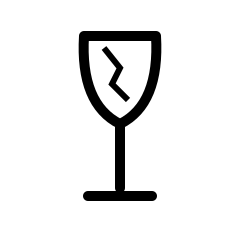
The symbol shows a stemmed wine glass. It indicates that the contents are easily damaged by impact. Handlers should lift and set the box down gently, never throw it and never let it drop.
This way up
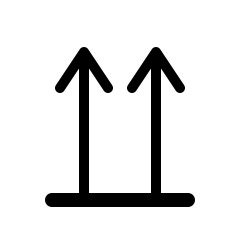
The symbol shows two parallel arrows pointing upwards with a horizontal bar at the base. It indicates the correct upright position of the box. The box must not be turned upside down or laid on its side.
Keep dry
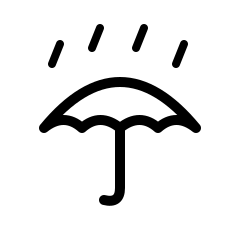
The symbol shows an umbrella with raindrops falling on it. Both the goods and the corrugated box can be damaged by moisture. The box must be protected when handled outdoors.
Keep away from sunlight

The symbol shows a sun with rays and a shelter above it. It requires that the box is not exposed to direct sunlight.
Temperature limits
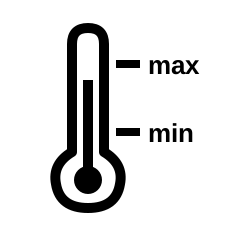
The symbol shows a thermometer with the minimum and maximum temperature values. The goods may only be stored and transported within the temperature range stated on the symbol.
Carriers should check the temperature range before loading. Such goods usually require a refrigerated truck or a temperature-controlled warehouse.
Centre of gravity
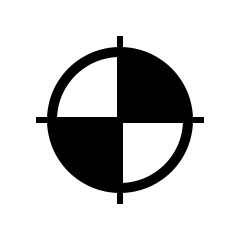
The symbol shows a circle divided into four quarters, with two opposite quarters filled in. It marks the position of the centre of gravity when it is offset from the geometric centre of the box.
When lifting with a forklift or crane, the forks and slings must be positioned evenly around this point. If it is ignored, the package may tilt, tip over or slide off the forks.
Stacking limit by mass
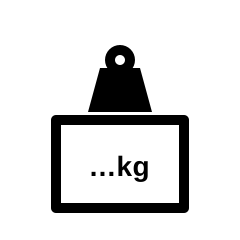
The symbol shows a weight placed on a box, with the maximum mass in kg. This is the maximum total mass that may be placed on top of the bottom box.
Stacking limit by number
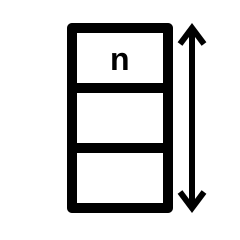
The symbol shows stacked boxes with the number “n”. The number indicates the maximum number of identical boxes that may be stacked on top of the bottom box. The bottom box is not included in this number.
Do not stack
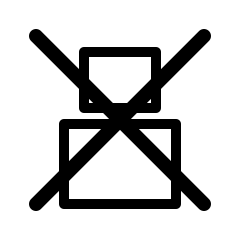
The symbol shows a box with a load on top, crossed out. No box or object of any kind may be placed on top.
Clamp as indicated
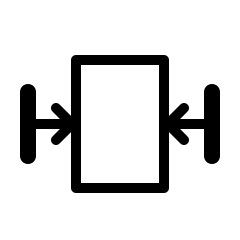
The symbol shows two clamp arms pressing against two opposite sides of the box. It is printed on the two sides where forklift clamps may make contact.
Do not clamp as indicated

The symbol is the same as the clamp symbol but crossed out. The two sides bearing this symbol must not be used as clamping surfaces.
Use no hooks
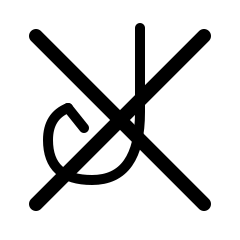
The symbol shows a crossed-out hook. Hand hooks must not be used to pull or lift the box.
Do not roll

The symbol shows a box tumbling over its edges, crossed out. The box must not be rolled or tipped over to move it.
Do not use hand truck here

The symbol shows a crossed-out hand truck. The blade of a hand truck must not be inserted on the side bearing the symbol.
Use no forklift
The symbol shows a crossed-out forklift. The side bearing the symbol must not be used for inserting forklift forks.
Sling here
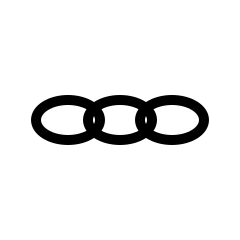
The symbol shows a length of chain. It indicates where slings should be placed when lifting the package with a crane.
Magnetic sensitive
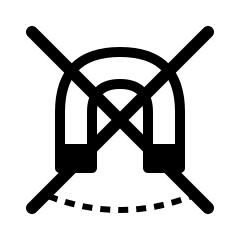
This symbol is not part of the ISO 780 set. Some shippers print it themselves to warn that the goods are sensitive to magnetic fields, such as electronic equipment or measuring instruments. The goods should be kept away from magnets and large electric motors.
Environmental and Recycling Symbols
Mobius loop

The symbol shows three twisted arrows forming a triangular loop. It indicates that the packaging is made from recyclable material. It does not mean that the box already contains recycled material. Nor does it mean that the box is intended for reuse.
Mobius loop with percentage
When a percentage figure appears in the middle or next to it, the symbol indicates the proportion of recycled material in the packaging. Only the version with a percentage confirms that the packaging contains recycled material.
FSC
The FSC logo, a tree combined with a check mark, indicates that the paper used for the box comes from responsibly managed wood or paper sources. Only FSC-certified companies may print this logo, together with their certificate code.
PAP 20, PAP 21, PAP 22
The code consists of the letters PAP and a number, usually printed inside a loop of arrows. The coding system is set out in European Commission Decision 97/129/EC. PAP 20 is corrugated board, PAP 21 is non-corrugated board and PAP 22 is paper.
Technical Information on the Box
Box Maker’s Certificate
This is a round stamp, usually printed on the bottom of the box. It is common on goods exported to the United States, under NMFC Item 222 and UFC Rule 41. The stamp states the name and location of the box manufacturer and the strength ratings.
There are two common versions. The Bursting Test version states the bursting strength and the minimum combined basis weight of the facings. The Edge Crush Test (ECT) version states the ECT value. Both versions state the size limit and the gross weight limit of the box.
If a box exceeds the limits on the stamp, the carrier may refuse damage claims.
Box Compression Test (BCT)
BCT is the maximum compressive load the complete box can withstand before it collapses. This value is directly related to the number of layers that can be stacked safely in a warehouse. BCT depends on the ECT of the corrugated board, the box perimeter and the box height.
Humidity, storage time and pallet overhang all reduce BCT. The stacking limit printed on the box should therefore be calculated from BCT with a safety factor.
The quality of the board produced by the corrugated line has a direct effect on ECT and BCT.
Other printed information
In addition to the packaging symbols, boxes usually carry the place of manufacture, product name, quantity, weight and dimensions. Export cargo also carries the package number, port of destination and order number.
Dangerous Goods Labels and the Radiation Symbol
The three-bladed radiation symbol is not an ordinary packaging symbol. It is the Class 7 dangerous goods label, applied in accordance with the dangerous goods transport regulations for each mode of transport. Labels for flammable, corrosive or toxic substances also belong to this system.
Printing Symbols on Corrugated Boxes in the Factory
Printing with a flexo printer
Fixed symbols such as Fragile, This way up and Keep dry are printed with a flexo printer at the same time as the box. The symbols are placed on a separate printing plate or combined on the same plate with other content in the same colour.
When designing the printing plate, note the following points:
- Place the symbols in the correct position, usually the upper left corner of a side panel.
- Make them large enough to read at handling distance, following the size recommendations in ISO 780.
- Use a colour that contrasts with the liner, usually black; avoid red, orange and yellow so they are not confused with dangerous goods labels.
- Check that the “This way up” arrows match the orientation of the box flaps after die-cutting and gluing.
More information on the machine types is available in the article types of flexo printers today. At the box forming stage, the symbol positions must match the die of the die-cutting machine.
Printing with an inkjet printer
Batch-specific information such as lot number, production date, product code or barcode should be printed with an inkjet printer. An inkjet printer prints directly onto the box without the need for a new printing plate.
Many plants combine both methods. To choose a configuration that suits your box sizes and output, contact PTS for printer configuration advice.
Quick Reference Table of Handling Symbols
| Symbol | Name | Meaning | Transport note |
|---|---|---|---|
| Fragile | Goods easily damaged by impact | Lift and set down gently, do not throw |
| This way up | Correct upright position of the box | Do not turn upside down or lay on its side |
| Keep dry | Goods sensitive to moisture | Protect from rain, do not place on wet ground |
| Keep away from sunlight | Goods sensitive to heat and sunlight | Cover and keep in a cool place |
| Temperature limits | Permitted temperature range | Use temperature-controlled vehicles or storage |
| Centre of gravity | Position of the package’s centre of gravity | Position forks and slings evenly |
| Stacking limit by mass | Maximum load on the bottom box | Do not exceed the kg stated on the symbol |
| Stacking limit by number | Maximum number of boxes stacked on top | Do not exceed the number “n” stated on the symbol |
| Do not stack | Cannot bear any load on top | Do not place anything on the box |
| Clamp as indicated | Sides where forklift clamps may be applied | Place clamp pads on the two marked sides only |
| Do not clamp as indicated | Sides that must not be clamped | Clamp on the other pair of sides |
| Use no hooks | Hand hooks prohibited | Lift by hand or with suitable equipment |
| Do not roll | Rolling or tipping the box prohibited | Lift or use a hand truck |
| Do not use hand truck here | Side cannot bear a hand truck blade | Turn the box and use another side |
| Sling here | Sling attachment point | Attach slings only at the marked positions |
Frequently Asked Questions
Are carton box symbols required by law?
ISO 780 is a voluntary standard, but many contracts and importers make it mandatory. Dangerous goods labels are mandatory under dangerous goods transport regulations.
Does the Mobius loop mean the box is made from recycled paper?
No. A Mobius loop without a number only indicates that the material is recyclable. Only when a percentage figure is included does the symbol indicate the proportion of recycled material in the packaging.
What does PAP 20 mean?
PAP 20 is the material code for corrugated board, under EU Decision 97/129/EC. PAP 21 is used for non-corrugated board and PAP 22 for paper.
What is the difference between ECT and BCT?
ECT measures the edge crush resistance of a sample of corrugated board. BCT measures the compressive load the complete box can withstand. ECT is one of the factors that determine BCT, together with the box dimensions.
Should symbols be printed with a flexo printer or an inkjet printer?
Fixed symbols should be printed with a flexo printer at the same time as the box. Batch-specific information such as lot number and production date should be printed with an inkjet printer.
Compiled by PTS from multiple sources.