







R107 Flexo Print Inspection Machine – Comparing printed corrugated sheets with the artwork using line-scan imaging and AI
Every month a corrugated packaging plant has to make many printing plates (photopolymer plates) for new orders. Before mass printing, each plate must be confirmed to match the customer’s original artwork. The usual method is to print one sample sheet and have a worker check it by eye. With complex print content, small text, foreign languages, barcodes and QR codes, visual checking is slow and cannot cover everything.
The R107 flexo print inspection machine replaces that work with an automatic cycle: it scans the entire printed sheet, compares it with the original PDF or the customer sample, and shows the position and type of each defect before the order goes into production.
Machine overview
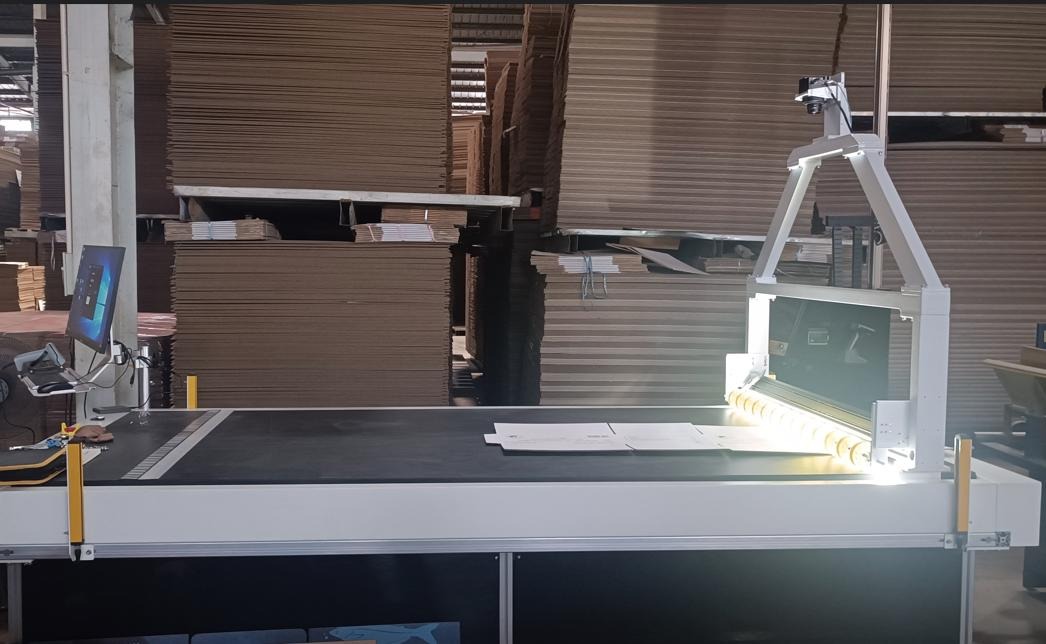
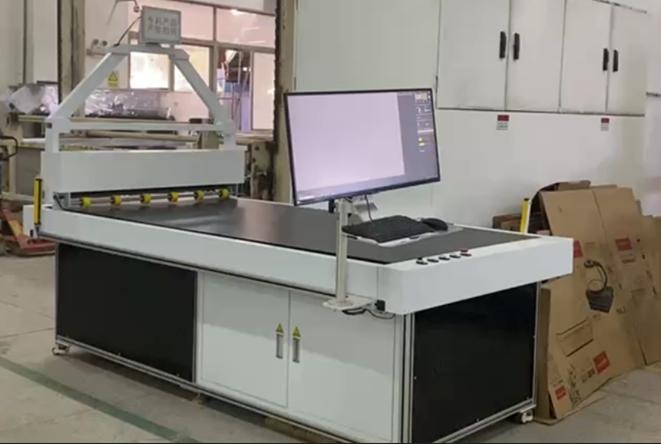
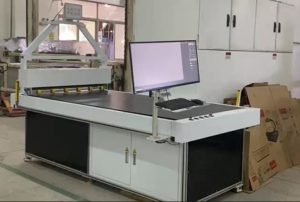
The R107 is an offline, single-sheet inspection device for the corrugated printing process. It can be placed beside the sheet-fed flexo printer or in the plate-making workshop. It uses an industrial colour line-scan camera with up to 16K resolution combined with deep-learning defect detection algorithms.
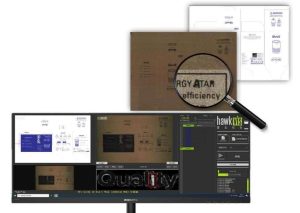
The system imports the PDF artwork or a sample carton image as the standard template, then scans the printed sheet and compares it with the template. Compared with an in-line inspection system, this offline solution detects smaller defects and checks more defect types.
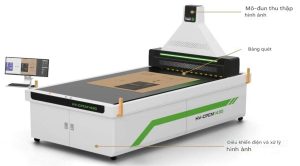
The machine consists of four parts: scan table, image acquisition module, electrical control and image processing cabinet, and operator HMI station. The series has three models, R107-S, R107-M and R107-L, according to the maximum board size.
Applications
- Plate verification before production: inspect the first printed sample to confirm that the printing plate matches the approved artwork.
- Quality checks during the run: inspect random samples taken from mid-production.
- Flexo printed corrugated boxes with content that must be controlled: text, logos, tables, barcodes and QR codes.
Inspection process
- Load the template by barcode scanner or manually: the original PDF file or a sample carton image. The system builds the model automatically using layout analysis algorithms.
- Place the printed sheet on the scan table; the machine completes the scan automatically.
- Deep-learning algorithms process the scanned image and locate the defective content and its position.
- All detected defects are displayed by category for the operator to review.
Key technical features
1. Image acquisition hardware
- Industrial colour line-scan camera, up to 16K, capturing high-resolution images at high scan speed and picking up very minor differences on the printed surface.
- The camera is mounted on a high-precision moving mechanism that starts automatically when an inspection cycle is activated.
2. Two comparison modes
- PDF artwork versus printed sheet.
- Customer sample carton versus printed sheet.
3. Automatic layout analysis
- Inspection parameters are applied automatically by content type: pattern/logo, tables and table lines, text, and 1D/2D codes.
- Parameters adjust themselves to the layout, which keeps the false alarm rate low.
4. One-click deletion of PDF marking lines
- Marking lines in the design file are position references only and are not printed; if left in, they cause continuous false detections, and deleting them one by one takes time.
- The software removes all marking lines with one click before inspection.
5. Software interface
- Side-by-side display of the template and the scanned sample on a large screen, at the same scaling ratio.
- Repeated playback of the template, the scanned copy and the difference map makes deviations easy to see.
- A difference list is generated automatically, reducing manual checking work.
Detectable defects
- Print errors, missing print, partial missing print.
- Registration issues: blurry edges, ghosting, misaligned print, visible gaps, position deviation.
- Colour misregistration and wrong ink colour installation.
- Smudges, streaks and contaminants.
- Barcode errors and barcode readability verification.
Practical benefits for the plant
- Eliminates human error: replaces slow and inaccurate visual checking.
- Waste reduction: defects are found on the first sheets, so the press can be stopped in time and large defective batches are avoided.
- Quality assurance: lowers the risk of complaints and recalls caused by wrong printed content.
- Faster approval: about 40 seconds per inspection cycle on average, depending on the size and complexity of the printed board.
Suitable customers
- Corrugated box plants running sheet-fed flexo printers with many orders and frequent job changes.
- Plants supplying boxes for export, electronics and consumer goods customers with strict requirements on printed content and barcodes.
- Prepress and QC departments that need a plate approval tool to replace visual checking.
R107 models
| Parameter | R107-S | R107-M | R107-L |
|---|---|---|---|
| Max. board size | 1800 × 900 mm | 2400 × 1200 mm | 3000 × 1400 mm |
| Machine dimensions (L × W × H) | On request | 2850 × 1395 × 2125 mm | 3450 × 1745 × 2125 mm |
| Max. board thickness | 15 mm | 15 mm | 15 mm |
General technical specifications
| Parameter | Value |
|---|---|
| Inspection type | Offline, single sheet; beside the printer or in the plate-making workshop |
| Camera | Colour line-scan camera, up to 16K |
| Inspected content | Text, pattern, logo, table, dotted line, 1D code, 2D code |
| Detection precision | > 1 mm² |
| False alarm rate | Low, thanks to automatic layout analysis and self-adjusting inspection parameters |
| Processing time | Average 40 seconds per cycle (depending on board size and complexity) |
| Template load | By barcode scanner or manually |
| Comparison mode | PDF vs printed sheet; sample carton vs printed sheet |
| PDF marking lines | One-click deletion supported |
Scope of supply and service
- Each set includes the complete machine, an industrial PC (IPC) and the print inspection software.
- Remote guidance and online video meetings for after-sales support.
- Software updates during the service life.
Conclusion
The R107 flexo print inspection machine moves plate approval in corrugated plants from visual checking to automatic comparison with the artwork, finding content defects before mass production. The model is selected according to the largest sheet size of the flexo printer in use.
Contact PTS for advice on the right model, installation position and a detailed quotation.







Reviews
There are no reviews yet.